What Makes Phygitech Different from Other VR Lab Providers
By Phygitech Team · Updated · 3 min read

When a school starts looking at VR labs, the first thing it compares is headsets. That is understandable, because the headset is the part you can hold. But ask any teacher who has run a lab for a term and they will tell you the headset was never the hard part.
The hard part is everything around it. Does the content match what I am teaching this week? Can I start thirty students at once? What happens when the internet goes down in the middle of a period? We have spent years on those questions, and they are where we are different.
We were here early
Phygitech is one of the pioneers of VR in school education in India. Today our labs run in 200+ schools and reach over 1.5 lakh students. That history matters for a simple reason: we know how Indian classrooms actually work, and we build for them.
One company, the whole lab
Many labs are assembled from parts: devices from one vendor, content from another, software from a third. When something stops working, each one points at the other.
We build and supply the complete setup ourselves:
- VR devices with controllers, a storage cum docking station, a Wi-Fi router and a teacher console
- A K-12 library of VR content mapped to the curriculum
- PHYGIVR Class Management for the teacher
- An online Learning Management System
If a school needs more than VR, the same is true for our AR Lab and 2D-3D Lab. One team, one number to call.
The teacher stays in charge
A room full of children wearing headsets can go wrong quickly if the teacher cannot see what they see. With PHYGIVR Class Management on a laptop or tablet, the teacher launches a lesson on every device together, watches each student's screen live, and can pause the whole class with one tap.
It sounds like a small thing. For a teacher handling a class alone, it is the difference between using the lab every week and avoiding it.
It keeps working without internet
School internet is not always dependable, and we designed for that. Class management runs over the lab's own network, so a lesson carries on whether the internet is up or not. The online system is there for lessons, assessments and reports, and results from offline classes sync to it as soon as the internet is back.
Our own team builds every lesson
Our content is developed in-house by instructional designers, 3D modellers, graphic designers, programmers, quality analysts, subject experts, translators and voice-over artists. It covers 2D, 3D, 360° video, AR, VR, MR and WebXR, and it is mapped to CBSE, ICSE, IB, IGCSE and state boards.
We do not leave after installation
A lab that nobody is confident using becomes a locked room. We run training and workshops for teachers so that they can fit VR into their own lesson plans, and we stay available afterwards.
The best way to judge any of this is to see it. Book a demo and bring a teacher along. Their opinion will tell you more than a brochure.
Frequently asked questions
Is Phygitech only a VR company?
No. We set up VR, AR and 2D-3D labs for K-12 schools, and we also build custom VR training for healthcare and industry.
Can the lab run if our school internet is unreliable?
Yes. Class management works over the lab's own network, with or without internet, and results sync to the LMS when the internet is back.
Do you provide the content or only the devices?
Both. Every lab comes with our own curriculum-mapped content library, class management and Learning Management System.
See it in your own school
Book a free demo and try the VR, AR and 3D labs with your teachers.
Book a Free DemoKeep reading
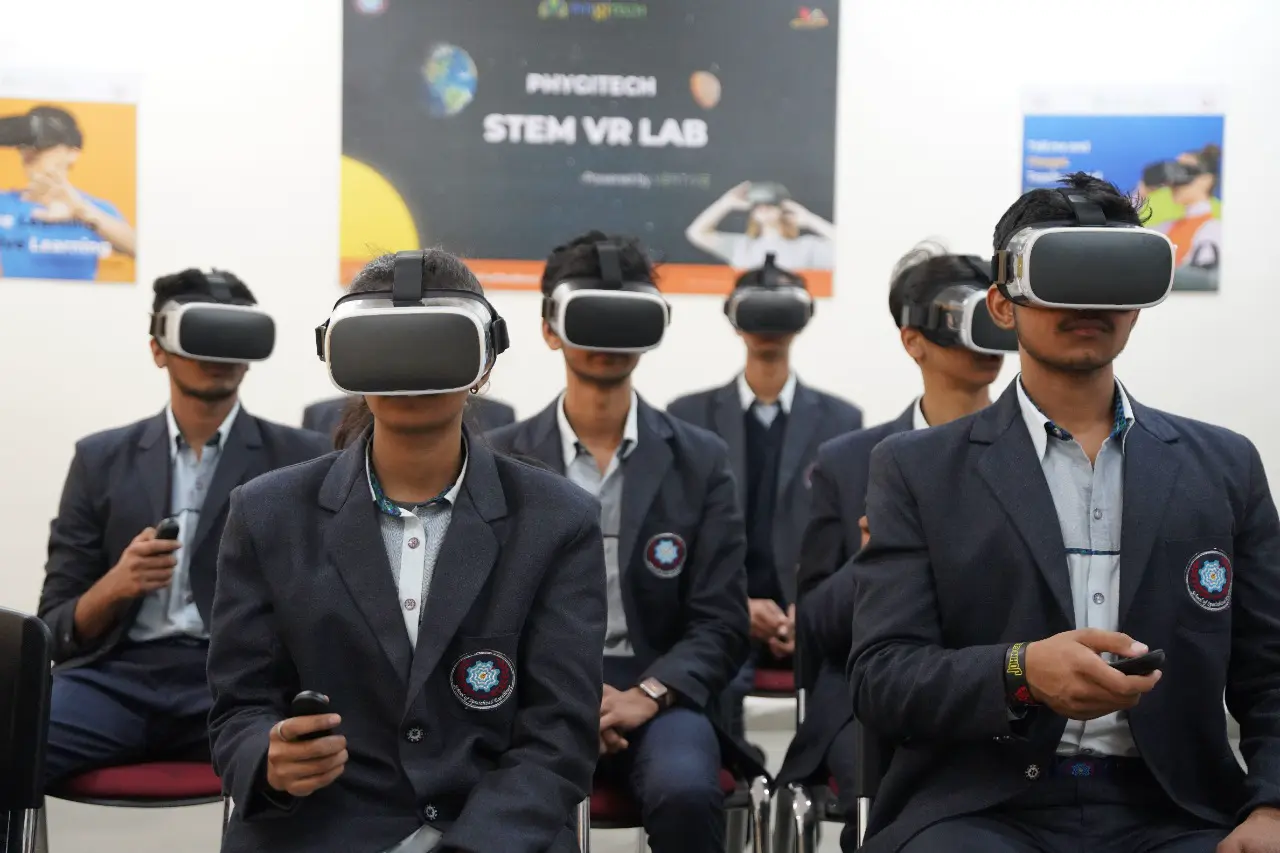
Built for the Classroom: How a Phygitech Lab Fits a Real School Day
A VR lab has to survive a real timetable. Here is how a Phygitech lab is designed around the school day, from charging to class control.
· 3 min read
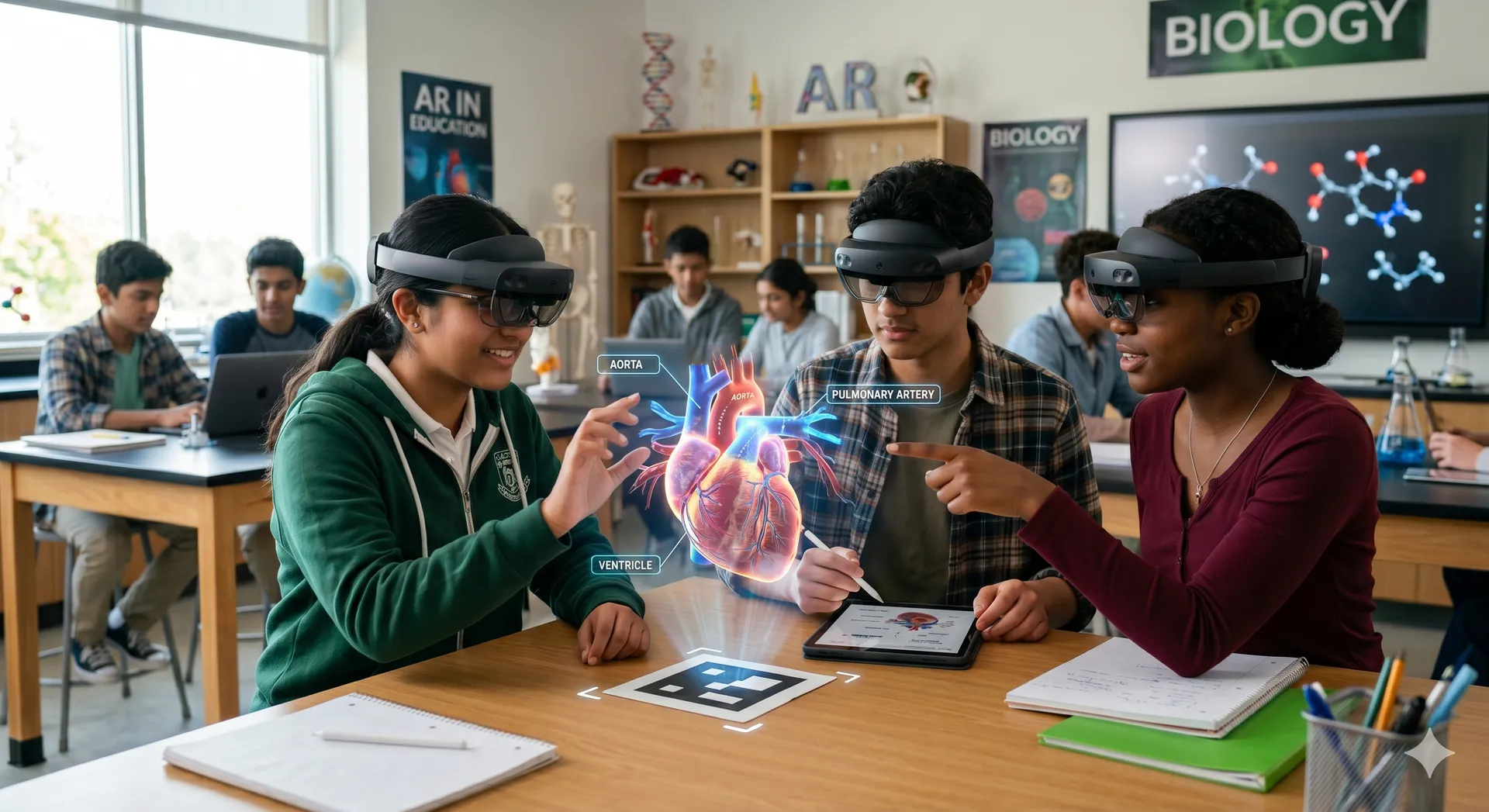
Inside the Phygitech AR and VR Content Library, and What Educators Say About It
What is in the Phygitech AR and VR content library, how it is mapped to the curriculum, and what teachers, principals and students have said about it.
· 3 min read